

The Care Journey: Adapting as Your Needs Change
Care needs rarely arrive all at once. They tend to build gradually: a fall here, a missed meal there, a growing sense that home is no longer quite as safe as it was. The right care adapts as those needs change, so nobody has to start again somewhere new.
What is a care journey?
A care journey is the path someone follows as their support needs change over time. It might begin with independent living and reassurance nearby, move to daily support, and later include more specialist or ongoing care.
Not everyone travels every step, and nobody travels at the same pace. That is why the best care is flexible rather than rigid. It responds to the person as they are today, not to a fixed category.
How do you know when care needs are changing?
Usually through a pattern rather than a single moment. Signs that support may need to step up include:
Falls, near misses or growing unsteadiness
Missed meals, weight loss or medication that is not being taken reliably
A home or garden that has become hard to manage
More confusion, forgetfulness or getting lost in familiar places
Withdrawal, loneliness or low mood
A family carer who is exhausted and running out of options
A hospital stay that changes what feels manageable at home
If you are here because of a sudden hospital stay, our guide on what to do when a loved one needs care after hospital discharge covers the first practical steps.
You can also ask your local council for a care needs assessment. The NHS social care and support guide explains how it works.
Why does continuity matter as care needs change?
Because every move is disruptive, and the people who feel it most are often the people we are trying to help. A new place means new faces, new routines and telling a life story all over again. For someone living with dementia, familiar people and surroundings can make a real difference to how settled they feel.
That is the thinking behind the way we care for people at Lavender Fields:
You do not need to move elsewhere when your needs change.
You are supported by people who already know and understand you.
Your care plan is flexible, not fixed.
There is no pressure, just time to talk, plan and adapt.
You can read more about our approach on the care journey page.
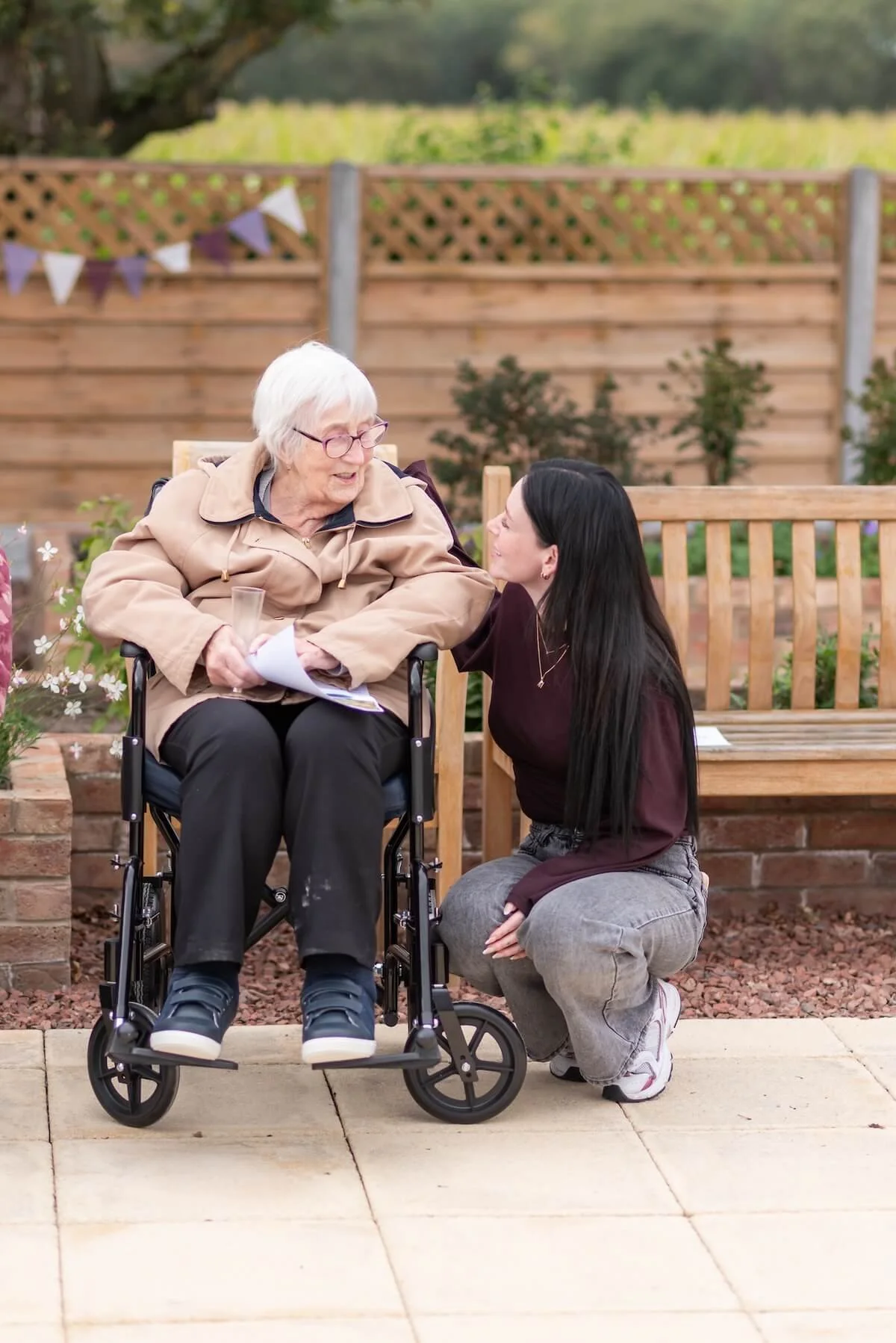
What does each stage look like at Lavender Fields?
Independent living with support nearby
Our bungalows are accessible, self-contained homes with full gardens, set within the village. Residents live independently with reassurance close by. They are popular and eligibility requirements apply, so it is worth asking early.
Residential care
When more day-to-day support is needed, residential care at Provence House provides 24-hour professional care in a warm, homely setting. Each resident has a private bedroom with en suite shower room, home-cooked meals, and access to daily activities and The Hub, our indoor village high street with a pub, café, hairdressers, gym, treatment area and village store. For most, this also includes a patio door opening out onto manicured courtyards and spaces to take in some fresh air or admire the local countryside…all within a safe and secure space.
Dementia support
For residents living with dementia, we provide specialist care in a calm, familiar environment, delivered with compassion, dignity and real understanding. Our dementia care page is written for families and explains what to expect.
Compassionate care
For residents who need more ongoing or sensitive support, compassionate care is gentle, personal and always delivered with calm and dignity.
What happens to the cost when care needs change?
At Provence House, there is one transparent weekly fee that covers care and accommodation, and it does not increase as care needs change. Fees are reviewed once a year in April, and we explain any change in advance so you always know what to expect.
There are no tiers and no hidden extras, and everyone is treated equally. The full list of what is included is on our pricing and what's included page.
Can a short stay help you plan ahead?
For many families, yes. A short-term stay gives your relative a real feel for daily life in the village, and gives you, or the family carer, time to rest. Stays tend to be most meaningful from around one week, long enough to settle in and to see how life feels day to day.
How do you plan ahead without pressure?
Talk early. Start the conversation while your relative can shape the decisions. What matters to them? What worries them?
Get the legal basics in place. A lasting power of attorney lets someone you trust act if capacity is lost. It has to be made while the person still has capacity, so do not leave it late. GOV.UK explains how it works.
Visit and ask questions. Seeing a home in person tells you more than any brochure. Book a visit and bring everyone who is involved.
Review as things change. A plan made today should be revisited as needs shift, not treated as fixed.
Care should never feel like starting again. As needs change, the people, the place and the promise of care should stay familiar.
Frequently asked questions
When should someone move from independent living to residential care?
There is no fixed point. The right time is usually when day-to-day support becomes something someone needs rather than something they would like. It is best decided together, with your relative, the family and their GP or care team.
Can someone move from a bungalow to Provence House?
Yes. That is the idea behind the village. Residents move into a bungalow while relatively independent, and if care needs increase over time, they can move to Provence House, staying close to familiar surroundings and people.
Does moving into care mean losing independence?
Not at Lavender Fields. Residents choose their own level of independence while remaining fully supported.
Do fees go up if care needs increase?
No. There is one standard weekly fee for care and accommodation, reviewed once a year in April. It does not rise because someone needs more support.
How do I know whether my relative needs residential care or dementia care?
You do not have to decide alone. Our team can talk through what you are seeing at home, and you can visit to see what each type of support looks like in practice.
How do I arrange a care needs assessment?
Contact your local council's adult social care team and ask for a needs assessment. The NHS social care and support guide explains what to expect.
Start where you are.
You do not need to know exactly what kind of care is needed. Book a visit to see Provence House and talk things through with our team, or get in touch with any questions.