

How We Prevent Falls at Provence House
Falls are the leading cause of injury in older adults, but most are preventable. At Provence House, we take a proactive, person-centred approach to safety, combining expert staff, thoughtful environment design, and individual care planning to reduce risk without compromising residents' independence and dignity.
Why Fall Prevention Matters
Around one in three adults over 65 will have a fall each year, rising to one in two for those over 80, according to the NHS falls guidance. For families considering care, it is one of the most common and most understandable concerns.
The good news is that with the right environment, the right team, and the right approach to individual risk, falls can be significantly reduced.
How We Assess Risk From Day One
Every resident at Provence House receives a detailed, individual risk assessment before they move in. This is not a tick-box exercise. It is a genuine conversation with the resident and their family about how they move, what support they need, and what matters most to them.
We look at:
Mobility and gait — how someone moves day to day, and where they may need support
Medication — some medications can increase dizziness or affect balance; we work closely with GPs to monitor this
Vision and hearing — sensory changes are a common but often overlooked fall risk
Cognitive needs — for residents living with dementia, we consider how orientation and spatial awareness may affect safety
Previous falls history — understanding what happened before helps us prevent it happening again
This assessment is a living document. It is reviewed regularly and updated whenever a resident's needs or circumstances change.
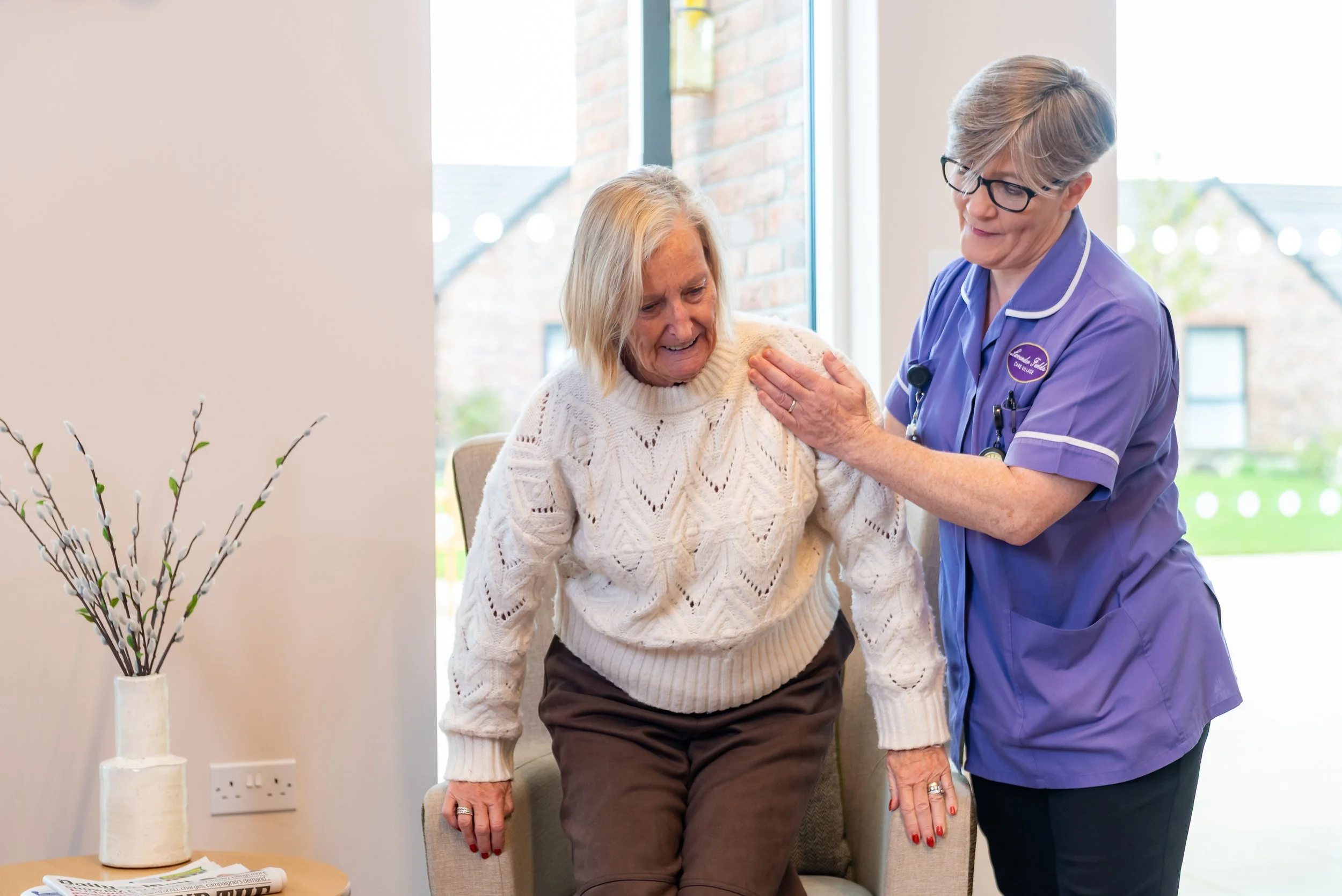
The Environment: Designed With Safety in Mind
At Provence House, safety is built into the fabric of the building, but we have worked hard to ensure it never feels clinical or institutional.
Handrails, level flooring, good lighting, and accessible bathrooms are standard. Beyond the basics, the layout of Provence House has been designed so that residents can move freely and confidently, including through The Hub - our on-site coffee shop, pub, and village high street — without feeling restricted.
Our grounds and gardens are also designed with safe, even pathways so residents can enjoy being outside throughout the year.
Our Team: The Most Important Safety Measure
No amount of equipment or environmental design replaces the value of an attentive, well-trained team who genuinely know the people they care for.
At Provence House, our staff are recruited for their empathy and vocation as much as their qualifications. They get to know each resident as an individual: their routines, their habits, the times of day they are most at risk, and they act on that knowledge every day.
"One of our residents had always been fiercely independent and would often try to get up in the night without calling for help. Rather than look to engage with restrictive practices or invasive measures, we worked with her family to understand her routine at home, adjusted her room layout, and introduced a gentle check-in at the times she was most likely to need support. She barely noticed the change, but the risk reduced significantly."
Senior Carer, Provence House
You can find out more about the people behind the care on our Meet the Team page.
Equipment and Assistive Technology
Where appropriate, we use assistive technology to support safety, including falls sensor mats and nurse call systems, always with resident consent and dignity at the forefront.
We regularly review whether equipment is helping or hindering. Sometimes the most effective intervention is a simple adjustment to a daily routine rather than a piece of technology.
Dementia and Fall Risk: A Specialist Approach
For residents living with dementia, fall risk requires particular care and understanding. Spatial awareness, depth perception, and the ability to communicate pain or disorientation can all be affected.
Our dementia care approach is built around understanding the whole person: their history, their preferences, and how their condition affects their daily experience. This deep familiarity is one of the most effective tools we have in keeping residents safe.
What Families Should Ask Any Care Home About Falls
If you are comparing care homes, here are the questions worth asking:
What is your falls rate, and how is it tracked?
How do you assess individual risk?
How do you communicate with families after an incident?
What is your post-fall review process?
Do you involve residents in their own safety planning?
Safety Without Restriction
Our goal is never to keep residents safe by keeping them still. A life without movement, independence, or the chance to take a short walk to the coffee shop is not a life well lived.
We work hard to find the balance, supporting people to do what they love whilst reducing unnecessary risk. That balance looks different for every resident, and we take pride in getting it right.
"Families often arrive worried that care means restriction. One of the things we hear most after a few months is how much more confident their mum or dad seems, more willing to move around, more settled. When people feel safe, they actually live more freely."
Lavender Fields
Thinking About Care for a Loved One?
If a recent fall has prompted you to start thinking about care, we are here to help. You can read more about our approach to residential care, or get in touch to arrange a visit.
You might also find our guide helpful: What to do when a loved one needs care after hospital discharge.