

Moving In Day: How We Help New Residents Settle
Moving into a care home is one of the biggest transitions a person will make in their life. Even when it is clearly the right decision, and even when the home they are moving into is a genuinely wonderful place, it is still a significant change. Leaving a home that holds decades of memories. Arriving somewhere unfamiliar. Learning new faces, new routines, a new rhythm to the day.
We do not underestimate that. And we do not leave people to navigate it alone.
Here is exactly what the first days and weeks at Lavender Fields look like, and how we work to make the transition as smooth, personal, and supported as possible.
Before move-in day: getting to know each other properly
The settling-in process starts well before anyone arrives with their belongings. We use the time between a decision being made and a move-in date to build a proper picture of who is joining us.
We have a detailed conversation with the resident and their family that goes well beyond clinical needs. We want to know:
What does a good day look like for them?
What are their routines, preferences, and habits?
What do they like to eat? What do they actively dislike?
Who are the people who matter most in their life?
What have they done, achieved, or loved over the course of their life?
What are they anxious about, and what would help them feel more at ease?
That conversation shapes everything. It means that on day one, we already know the person. We are not starting from scratch.
We also make sure the practical side is straightforward. Our team will walk families through what to bring, how the room can be personalised, and what the first few days will look like. No family should arrive on move-in day wondering what happens next.
Move-in day itself
We treat move-in day as something worth doing properly.
A named member of our team is there to meet the new resident and their family at the door. Not a general welcome from whoever happens to be passing, but a specific person who has been briefed on who is arriving and what matters to them.
The room is ready. Personal touches, whether that is a favourite photograph on the windowsill or a familiar blanket on the bed, make an enormous difference to how a new space feels. We encourage families to bring things from home that carry meaning: pictures, ornaments, a familiar chair if the space allows it. The room should feel like theirs from the moment they walk in.
We want the first impression of Lavender Fields to feel like arriving somewhere, not leaving somewhere. That distinction matters to us enormously.
We do not overwhelm new residents with information or introductions on day one. We let them lead. Some people want to explore, meet other residents, and get stuck in immediately. Others need a quieter first day. We follow their cue.
Families are encouraged to stay as long as they need to and to come back whenever they like. There is no "settling-in period" during which visits are limited. We find that families being present in those early days is genuinely helpful, and The Hub makes it easy to spend time here together in a way that feels natural rather than clinical.
The first two weeks: what to expect
The first two weeks tend to follow a pattern we have seen many times, and it is worth being honest with families about what that looks like.
Days one to three are often the hardest, particularly for residents who are anxious about the change or who have some cognitive difficulties. Emotions run high. There may be moments of upset, confusion, or resistance. This is completely normal. Our team is experienced at sitting with that difficulty, not rushing past it.
By the end of the first week, most residents have found an anchor: a member of staff they feel comfortable with, a meal they enjoy, an activity that suits them, or simply a favourite spot to sit. That anchor is often more important than anything else in establishing a sense of belonging.
By the end of two weeks, the vast majority of residents have settled into a rhythm. The unfamiliar becomes familiar. Faces become names. Routines start to feel like their own.
We keep families closely informed throughout this period. You should never have to chase us for an update.
How we personalise daily life from the start
Care plans at Lavender Fields are not a document you sign and forget. They are a living description of how we look after someone, and they are built on what we learned about that person before they arrived.
From day one, we work to fit Lavender Fields around the resident, not the other way around. That means:
Mealtimes are a preference, not a strict schedule. If someone has always had a late breakfast, we accommodate that.
Activities are offered, never imposed. We look at what someone has always enjoyed and work from there, rather than expecting everyone to join the same programme.
Social engagement is paced to the individual. Some residents want to be in The Hub every morning. Others prefer their own company for much of the day. Both are equally valid.
Staff continuity matters. We try to ensure new residents see familiar faces in those early weeks. Being cared for by people you recognise accelerates settling in significantly.
You can explore daily life and routines at Lavender Fields and activities and events to get a clearer sense of what everyday life looks like.
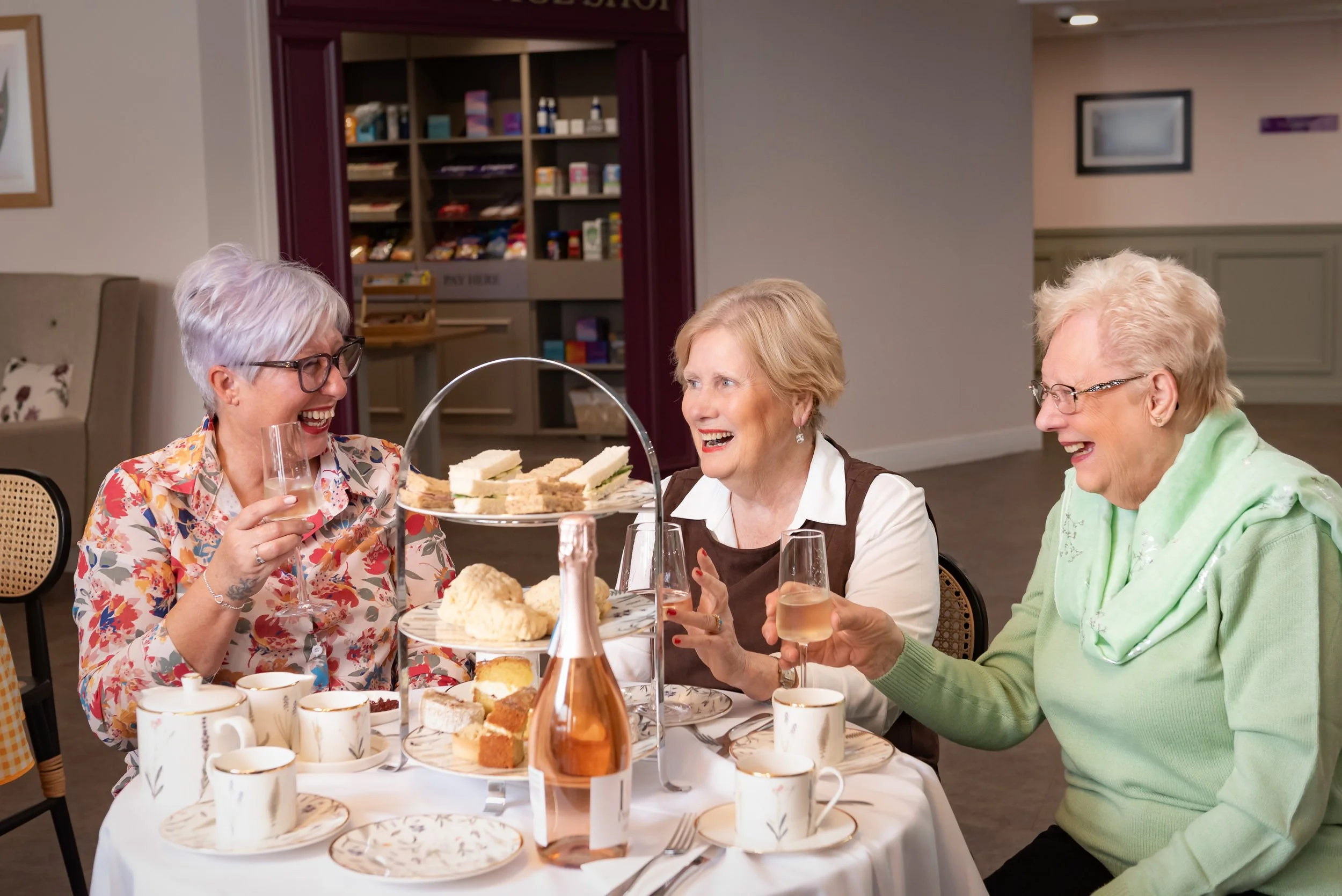
For residents living with dementia
Moving into a new environment is particularly challenging for people living with dementia, and we approach it differently.
Familiar objects and sensory anchors are even more important. We work closely with families to understand what has always brought comfort, whether that is a certain piece of music, a well-loved photograph, the smell of a particular soap, and we make sure those things are present from the start.
We also spend more time in the early days on orientation: gently and consistently helping a resident understand where they are and who we are, without causing distress or confusion.
Our specialist dementia team within Provence House is experienced at this. We do not rush the process, and we do not measure progress by how quickly someone adjusts. We measure it by whether they seem calm, comfortable, and cared for.
For families: the transition is yours too
We want to say this directly, because it often goes unsaid: the move-in period is hard for families too.
Leaving your relative on that first day is genuinely difficult. You may spend the drive home wondering whether you have done the right thing. You may feel the urge to call constantly, or alternatively to stay away because it hurts too much to visit.
Both responses are understandable. What we ask is that you stay in contact with us, visit when you can, and trust that the feelings of the first few days are not a reliable guide to how things will be in a month.
The families who tell us they wish they had done this sooner are often the same families who cried on move-in day. Both things can be true at once.
You can read about how we support families through every stage, or see what other families have said about their experience at Lavender Fields.
Thinking about a move? Come and see us first.
The best way to understand what moving into Lavender Fields actually looks and feels like is to visit before any decision is made.
We welcome families for informal tours, and we encourage the person who might be moving in to come along too, where possible. Seeing the village, meeting the team, and getting a sense of the atmosphere tells you more than any article can.
Arrange a visit here, or contact us if you have questions you would like to talk through first.
Frequently Asked Questions
How long does it take to settle into a care home? It varies, but most residents find their feet within the first two weeks. The first few days are often the hardest. By the end of the first month, the vast majority of residents have a settled routine and familiar relationships with staff and other residents.
Can family members stay on move-in day? Yes, and we actively encourage it. There is no limit on how long family can stay, and The Hub means there are comfortable spaces to spend time together throughout the day.
What should I bring when moving into Lavender Fields? We provide furniture and essentials, but personal items make a huge difference. Photographs, familiar ornaments, a favourite blanket or cushion, and clothing that the resident is comfortable in all help to make the room feel like home. Our team will guide you through the specifics before move-in day.
What if my relative is very anxious about moving? Anxiety before and during a move is extremely common. We manage this through good preparation, familiar faces on arrival, a room that already feels personal, and a team that is experienced at sitting with difficulty rather than rushing past it. We will keep you closely updated throughout.
Do you limit visiting in the first few weeks to help residents settle? No. We do not restrict visiting during a settling-in period. We find that family involvement in the early weeks is helpful, not disruptive, and The Hub makes visiting here a genuinely enjoyable experience for everyone.