

The Benefits of Care Village Living
A care village is a purpose-designed later-life community that combines residential care with on-site social, leisure and wellbeing facilities, giving residents everything they need for a full and connected daily life without leaving the grounds.
For many people, the decision to move into care is shaped by a single question: what will my life actually look like? A care village answers that differently from a conventional care home, because rather than a building where care happens to people, it is a community where life can continue. The people, rhythms and small everyday pleasures that make a place feel like home remain intact.
That distinction matters more than it might first appear. Genuine care villages are rare in the UK. Most families searching for care will encounter only conventional care homes, and the difference in daily experience is significant. At Lavender Fields, lying just outside York and near the market town of Pocklington, that philosophy sits at the centre of everything. This is what care village living offers, and why it matters.
What Is a Care Village?
A care village is a self-contained residential community providing personal care and support alongside a broad range of on-site amenities. These typically include social spaces, restaurants or cafés, wellbeing facilities and outdoor grounds, all designed to support a full daily life rather than just meeting care needs.
The model is distinct from a standard care home, which primarily provides accommodation and personal care in a shared building. A care village is built around the idea that older adults should have access to the same variety, choice and community connection they would expect anywhere else.
Care Village vs Care Home: What Is the Difference?
| Care Village | Traditional Care Home | |
|---|---|---|
| Primary purpose | Full daily life within a community | Personal care and accommodation |
| On-site amenities | Café, pub, salon, gym, shop, gardens | Varies; typically dining room, lounges, garden |
| Social environment | Village-style community with varied social spaces | Shared communal areas within one building |
| Sense of independence | High; residents move between spaces at will | More contained within the building |
| Outdoor access | Landscaped grounds, walking paths, raised beds | Garden, often limited in scope |
| Activities | Varied, often resident-led programme | Varies significantly by provider |
What Are the Benefits of Living in a Care Village?
1. Everything Within Reach
One of the most significant but least-discussed challenges of later life is that ordinary outings become effortful. A trip to the hairdresser, a coffee with a friend, picking up a newspaper — tasks that once took minutes can become major undertakings requiring planning, transport and recovery time.
A care village removes that friction entirely.
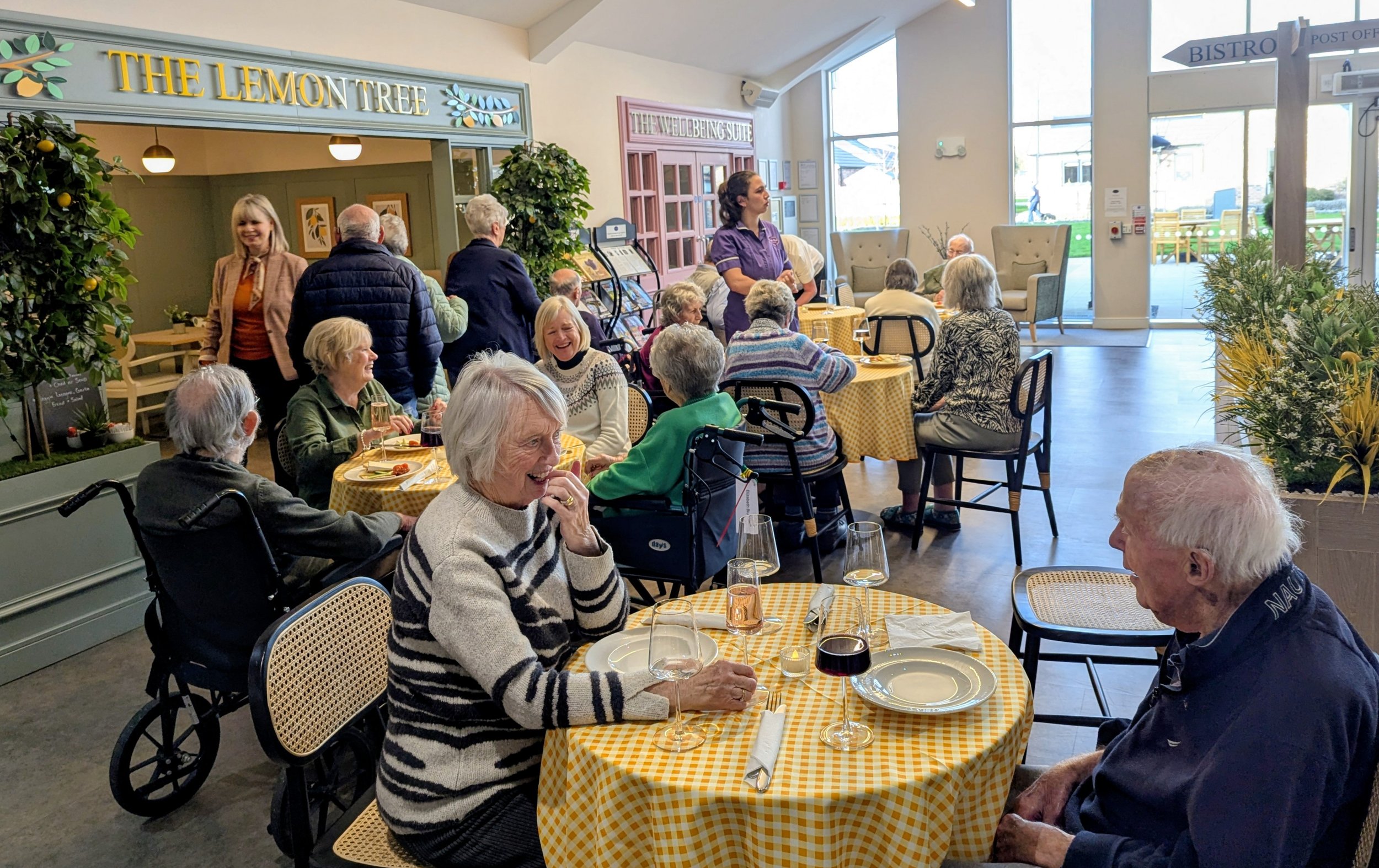
At the heart of Lavender Fields sits The Hub, which brings the high street directly to residents. Within it, The Lemon Tree café and bistro offers freshly prepared food and coffee in a warm social setting. The Stag provides a relaxed pub space, where residents can enjoy a drink with friends or family. The Wellness Centre houses a gym, hair salon, nail bar and therapy space. The Village Store covers everyday essentials, and the Multifunction Room hosts film nights, family celebrations and community events.
This is not a list of amenities. It is the architecture of an ordinary day — the kind of day that feels normal rather than managed.
2. Social Connection as a Measurable Health Benefit
The World Health Organisation has identified loneliness among older adults as a significant public health concern, with sustained social engagement consistently linked to reduced rates of cognitive decline, depression and physical deterioration.
A care village addresses this not through scheduled therapy sessions alone, but through the architecture of daily life. When a café, a pub and a shared garden exist within easy walking distance, social connection becomes incidental rather than planned. Friendships form over coffee. Conversations happen in the corridor. Company is available when wanted and solitude when preferred.
The activities and events programme at Lavender Fields reflects this understanding. From morning coffee in the gardens to live music evenings, seasonal parties and community events, the calendar creates repeated opportunities for connection without requiring residents to seek it out.
"The team work incredibly hard to provide residents with an engaging programme of events. My sister always has something to look forward to, and it makes her feel part of a real community." — Jennie C, Sister of Resident, via carehome.co.uk
3. Physical Wellbeing Built Into Daily Life
The WHO recommends that adults aged 65 and over engage in at least 150 minutes of moderate physical activity per week, alongside balance and strength activities to reduce fall risk. In a conventional care setting, meeting those recommendations depends entirely on what is organised and available.
In a care village, physical activity is woven into the environment itself.
The grounds and gardens at Lavender Fields are designed to be used, not admired from a window. Secure walking paths, raised beds, seasonal planting, a greenhouse, patios and wildlife corners all offer reasons to be outside and moving. The Wellness Centre within The Hub provides a gym with equipment calibrated to a range of physical abilities.
This matters especially for residents living with dementia or physical frailty, where consistent low-intensity movement — pottering in the garden, a short walk between spaces, tending raised beds — supports both physical function and emotional regulation in ways that a structured exercise class alone cannot replicate.
4. A Daily Rhythm That Belongs to the Resident
One of the most common concerns about care home life is the loss of personal routine — the feeling that your day is organised around the institution's needs rather than your own.
A care village model inverts this. When multiple social spaces, outdoor areas and activities exist within the same community, residents can move through their day according to their own preferences rather than a fixed timetable.
Daily life at Lavender Fields is built around exactly this principle. There are no enforced wake times. Breakfast can be taken in a private room, in the dining space, or with a cup of tea in the garden. Afternoons might mean a group session, a solo walk, a visit to the salon, or simply sitting in a favourite chair. Visitors are welcome at any time, without appointment.
The rhythm is familiar because it reflects how people actually choose to live, not because a schedule has been imposed.
5. Care That Grows With You
A care village is not a single point of entry. It can meet a person at different stages of their care journey, adapting as needs change, without requiring a disruptive move to an entirely different setting.
At Lavender Fields, the range of care available within a single community includesresidential care,specialist dementia support,compassionate end-of-life care andshort-term respite stays. For those who retain significant independence,bungalows on the grounds offer private living with the full village infrastructure on the doorstep.
Lavender Fields is not a registered nursing home, but many nursing needs that arise can be accommodated in practice. The team works closely with the local District Nursing service, meaning that clinical support can be brought to a resident where appropriate, without the disruption of a move.
Familiar staff, known surroundings, established friendships and embedded routines do not have to be surrendered when care needs increase. The community remains the same even as the level of support adjusts. Fees at Lavender Fields do not increase when care needs change — you pay one weekly fee that adjusts only annually for inflation, giving families genuine financial certainty.See full pricing and what's included.
6. Family Involvement Without the Burden of Coordination
Families of people in conventional care settings often carry a significant invisible load: coordinating appointments, arranging outings, managing the logistics of maintaining quality of life on top of the emotional demands of being a carer.
A care village reduces that load by resolving much of it within the community itself. When a hairdresser's appointment, a birthday lunch and a film evening can all happen on site, families can simply visit without needing to organise everything around it.
At Lavender Fields, families are part of the village rather than visitors to it. There are no formal visiting hours. Family members are welcome to join activities, share a meal in The Lemon Tree, or simply spend time together in the gardens.
Is a Care Village Right for Everyone?
A care village is best suited to people who want care support within a setting that actively maintains their social life, physical activity and personal independence — rather than one that primarily manages their health and physical needs in isolation.
The village model encompasses residential care, dementia care and short-term stays. What it offers is a context for those care types that prioritises quality of daily life, not just care delivery.
Those considering a care village should look at:
Whether the on-site facilities match their interests and social preferences
Whether the care types available align with current and likely future needs
The quality and character of the outdoor spaces, which significantly affect daily wellbeing
How the activities programme is designed — resident-led versus institution-led makes a real difference
Whether the community feels warm and settled, with familiar staff and low turnover
Provence House at Lavender Fields holds the BS 8606:2019 national care standard accreditation — a recognised external benchmark of quality care practice.Read what that award means in practice.
What to Expect From Daily Life at a Care Village
A good care village should feel immediately different from the moment you visit. The physical environment, the way staff and residents interact, and the visible presence of life — people moving between spaces, something cooking, music or conversation audible somewhere — are all reliable indicators of how daily life actually feels.
At Lavender Fields, village life is structured around the idea that belonging matters as much as care. The facilities, the programme, the unhurried rhythm and the openness to family are all designed to make the answer to "what will my life look like?" a genuinely good one.
Arrange a visit to Lavender Fields
Frequently Asked Questions
What is the difference between a care village and a care home? A care home provides accommodation and personal care within a single building. A care village offers all of that within a broader community designed to support a full daily life — including social spaces, wellbeing facilities, retail, gardens and a varied activities programme. Genuine care villages are also comparatively rare in the UK, which is worth keeping in mind when comparing options.
Can people with dementia live in a care village? Yes. Specialist dementia care is a core part of what Lavender Fields offers. The environment — with its familiar faces, recognisable spaces, garden access and consistent routines — is well-suited to supporting people living with dementia. The village design also supports gentle movement and social engagement, both of which have documented benefits for cognitive wellbeing.Find out more about dementia care at Lavender Fields.
Can someone try care village living before committing? Yes. Short-term respite stays at Lavender Fields allow individuals and families to experience village life without a permanent commitment. This is also a practical option when a family carer needs a break or when someone is recovering from illness or a hospital stay.Find out more about short-term stays.
Are visitors welcome at any time? Yes. There are no formal visiting hours at Lavender Fields. Families and friends are welcome throughout the day and can join meals, activities or simply spend time together in the village.
Where is Lavender Fields Care Village located? Lavender Fields is located on Feoffee Common Lane, Barmby Moor, York, YO42 4AF — a peaceful rural setting in East Yorkshire, a short distance from Pocklington and within easy reach of York.
How do I find out more or arrange a visit? The best way to understand what care village living feels like is to see it.Book a visit and the team will show you around, answer your questions, and help you work out whether Lavender Fields is the right fit. You can also call on 01759 380534 or email info@lavendergroup.co.uk.